A wonderful journey of Chinese embroidery
A wonderful journey of Chinese embroidery
A Craft Born on the Silk Road
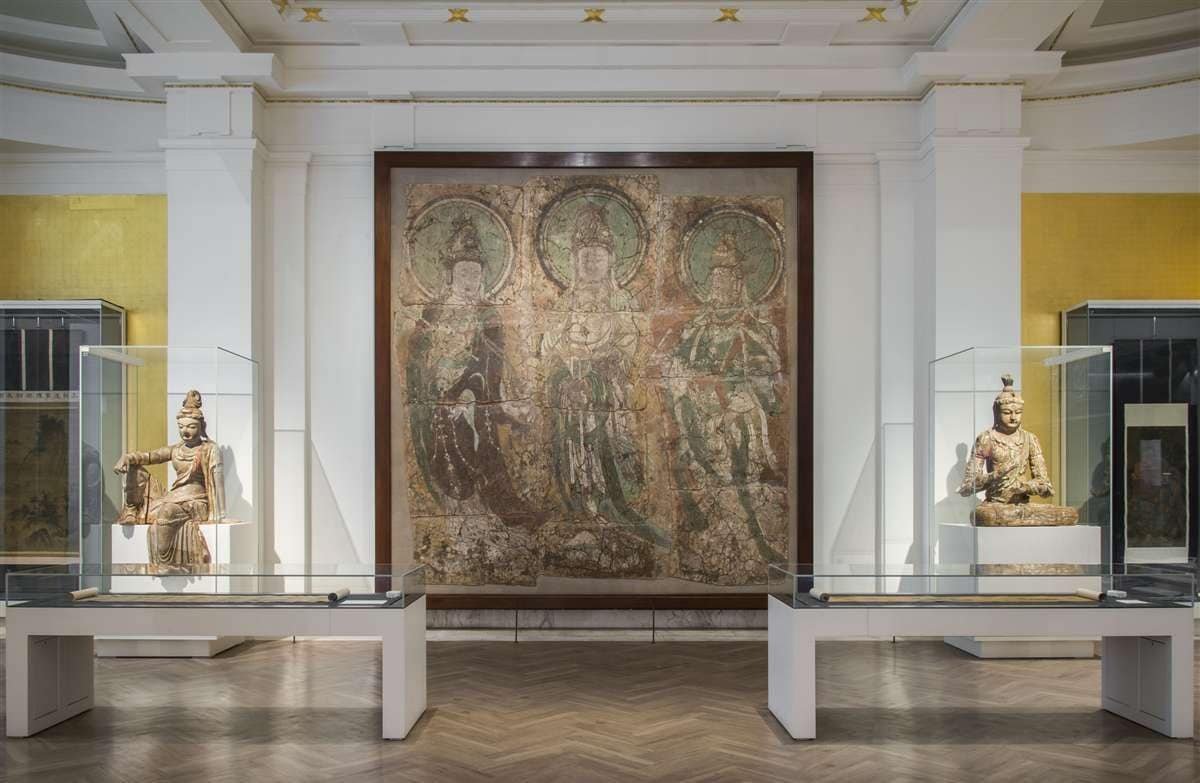
Long before Suzhou embroidery graced the walls of Buckingham Palace or caught the eye of curators at the Smithsonian, it traveled along one of history‘s greatest trade networks: the Silk Road. The story of Su embroidery is inseparable from the story of silk itself—a commodity so valuable that it gave its name to the ancient highways connecting East and West.
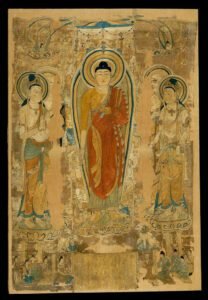
Around the 6th century AD, Chinese embroidery techniques, along with the closely guarded secrets of silkworm cultivation and silk manufacture. Merchants carried embroidered textiles to the Kingdom of Khotan and beyond, introducing Central Asia and eventually Europe to the extraordinary needlework of Chinese artisans.
Today, that ancient legacy continues. Suzhou embroidery represents not just an art form, but a living connection to one of humanity’s most significant cultural exchanges.
Ancient Origins: The First Threads
Archaeological evidence confirms that embroidery existed in China more than 3,000 years ago. The earliest discovered Chinese silk embroidery was unearthed in 1958 from a Chu State tomb dating back over two millennia. The piece, though fragmentary, revealed sophisticated stitching techniques already well-developed by that period.
Written records from the Three Kingdoms period (220-280 AD) contain the first detailed accounts of Suzhou-area embroidery. These texts describe noblewomen creating embroidered maps and natural scenes for the imperial court, establishing Suzhou as a center of excellence from the earliest days.
The foundation of what we recognize as Su embroidery‘s distinctive style—its “lingering charm”—was laid during the Sui (581-618 AD) and Tang (618-907 AD) dynasties. During this period, Suzhou’s silk industry expanded dramatically, providing the material foundation for artistic innovation.
The Song Dynasty Golden Age
The Song Dynasty (960-1279 AD) marks Suzhou embroidery‘s first true golden age. This period saw a remarkable convergence of circumstances that elevated the craft to new heights.
The Song court patronized the arts extensively, and Suzhou—already prosperous from silk trade—attracted scholars, poets, and painters. Embroidery naturally absorbed influences from the literati painting tradition, with artisans reproducing famous scroll paintings in silk thread. Birds, flowers, and landscapes became the dominant themes.
It was during the Song Dynasty that the name “Su embroidery” was first officially coined, distinguishing Suzhou’s distinctive style from other regional embroidery traditions.
By the subsequent Yuan Dynasty (1206-1368 AD), Suzhou embroidery‘s fundamental techniques and aesthetic characteristics had fully crystallized. The craft was no longer just decorative—it had become a legitimate fine art medium.
Imperial Patronage: The Qing Dynasty Peak
The Qing Dynasty (1644-1911 AD) represents Suzhou embroidery’s period of greatest imperial patronage and technical achievement. The Manchu emperors, though not ethnically Han Chinese, enthusiastically embraced Chinese cultural traditions—including the textile arts of Suzhou.
Su embroidery became the preferred choice for imperial court clothing, ceremonial robes, and palace decorations. Emperors wore dragon robes embroidered in Suzhou workshops; empresses displayed Su embroidery screens in their private chambers.
This imperial connection drove extraordinary innovation. Competing embroidery schools emerged in Suzhou, each developing signature techniques and styles. Masters trained apprentices in rigorous programs, and the craft reached levels of refinement that had never been seen before.
The Qing period also saw Suzhou embroidery begin its journey into international consciousness. Export workshops produced pieces specifically designed for Western tastes, incorporating European subject matter and compositional styles.
Shen Shou: The Artist Who Changed Everything
No figure in Suzhou embroidery history looms larger than Shen Shou (1874-1921). Born into a family of scholars in Suzhou, Shen received an education unusual for women of her era. She studied not only traditional embroidery but also painting, calligraphy, and—crucially—Western art techniques.
Shen‘s genius lay in synthesis. She recognized that embroidery could achieve effects impossible in painting if artists understood how to manipulate silk’s reflective properties. She studied photography to understand light and shadow, examined oil paintings to grasp perspective and volume, and even consulted anatomy texts to accurately render human figures.
The result was “realistic embroidery” (fangzhen xiu), a revolutionary approach that brought Western painterly effects into the realm of silk thread. Shen‘s 1915 masterpiece Jesus Portrait, displayed at the Panama-Pacific International Exposition in San Francisco, stunned Western audiences. They could not believe the portrait—with its subtle skin tones, lifelike eyes, and dimensional hair—had been created entirely with needle and silk thread.
The work won the exposition’s highest award, and international collectors immediately recognized Suzhou embroidery‘s artistic legitimacy. Shen Shou had single-handedly elevated a traditional craft to the status of global fine art.
Into the Modern Era: 20th Century Transitions
The 20th century brought both challenges and opportunities. The fall of the Qing Dynasty in 1911 eliminated Suzhou embroidery’s primary patron, forcing artisans to find new markets. Meanwhile, industrialization threatened handcraft traditions worldwide.
In 1954, the Chinese government established the Suzhou Silk Embroidery Research Institute, providing institutional support for preserving and advancing the craft. This state backing ensured that technical knowledge would not be lost during periods of rapid social change.
The 1980s and 1990s saw Suzhou embroidery find new international markets. Japanese, Korean, and European buyers sought both traditional pieces and works adapted to contemporary tastes. Embroiderer Zou Yingzi recalls that during this period, she and her mother produced many pieces specifically for overseas sale, helping support their family while preserving traditional skills.
Global Recognition: Museums and Honors
The 21st century has witnessed unprecedented international recognition for Suzhou embroidery:
2006: Su embroidery was included in China‘s first National Intangible Cultural Heritage list, formally acknowledging its cultural significance and ensuring governmental protection.
2012: For Queen Elizabeth II’s Diamond Jubilee, master embroiderer Yao Jianping created a portrait of the Queen that was formally collected by Buckingham Palace.
2013: The British Museum acquired three contemporary Su embroidery works for its permanent collection—the first time the museum had collected contemporary Chinese embroidery.
2014: UNESCO designated Suzhou as a Creative City of Crafts and Folk Arts, recognizing the city‘s centuries-old tradition of textile excellence.
2017: Su embroidery made its debut at the prestigious Venice Biennale, with Yao Huifen’s works introducing this Chinese art form to the international contemporary art world.
2024: Yao Jianping‘s Lotus Dew Whispers was exhibited during the Paris Olympics, continuing Suzhou embroidery’s presence at major global cultural events.
2025: A proposal was formally submitted for “Chinese Embroidery” (led by Su embroidery) to be recognized as a UNESCO World Intangible Cultural Heritage, aiming to secure the highest level of international cultural protection.
The Contemporary Landscape
Today, Suzhou embroidery occupies a unique position in the global art market. A single masterwork can command over $100,000, and pieces reside in prestigious collections including:
The British Museum (London)
Buckingham Palace (London)
The Smithsonian Institution (Washington, DC)
The Australian White Rabbit Gallery (Sydney)
The China National Arts and Crafts Museum (Beijing)
 In Suzhou, there are more than 8,000 embroidery workers working in about 500 studios. More than 1,000 works have received national or provincial honors, with over 300 gold medals awarded in domestic and international competitions.
Conclusion: A Living Connection to the Silk Road
When you hold a piece of Suzhou embroidery, you’re touching something that connects you directly to ancient history. The silk in your hands was cultivated and spun using methods perfected over millennia. The needle techniques were developed by countless unnamed craftswomen who dedicated their lives to beauty. The aesthetic sensibility reflects a culture that has valued refinement and precision since the age of empires.
Suzhou embroidery traveled the Silk Road, adorned imperial palaces, and now graces global museums. the human desire to create beauty, to preserve tradition, and to share our finest achievements across cultures and centuries.